Garuda is a key figure in many mythologies. He is found in Hinduism, Buddhism, and Jainism. This creature is often seen as a bird with the body of an eagle or a human with wings.
Garuda is the son of sage Kashyapa and Vinata. He is also the younger brother of Aruna. His family ties connect him to ancient myths and sacred traditions.
He is known for being the mount of Vishnu. Garuda is also a swift protector who battles nāgas, the legendary serpents. Art from the Gupta period shows Garuda’s connection to the sun and royalty.
This article will dive into Garuda’s role as a solar bird. We will look at his iconography, texts, and cultural impact. You’ll see how myths and legends portray Garuda and why he’s important in ancient myths and religious art.
Key Takeaways
- Garuda is a prominent figure across Hinduism, Buddhism, and Jainism.
- He is depicted both in zoomorphic and anthropomorphic forms.
- Garuda serves as Vishnu’s mount and as an enemy of serpents.
- Material culture, like the Gupta terracotta head, ties Garuda to solar symbolism.
- The solar bird motif links Garuda to themes of power, protection, and kingship.
Introduction to Mythology and Garuda
Mythology is how communities share their stories. It connects rituals, art, and beliefs, shaping behavior and identity. It offers a way to understand the past and guide today’s morals.
Studying ancient myths, we find common themes like duty, courage, and self-discovery. Museums display artifacts like Gupta terracotta heads, showing myths as a living tradition. Researchers use fieldwork and digital archives to study mythology’s spread over time and space.
Significance of Mythology in Culture
- Mythology keeps social values alive through rituals and stories.
- Myths and legends give metaphors for power and purpose to leaders and artists.
- Artifacts and coins show how ancient myths influenced public life and royal symbols.
Overview of Garuda in Hinduism
- Garuda is seen in Vedic, Puranic, and epic texts as a symbol of courage and duty.
- Garuda is used as a metaphor for the atman and as a symbol of yajna and rhythmic sound.
- In Hinduism, Garuda also appears in Shaiva texts and temple iconography, showing devotion and ethical duty.
The next parts will dive into how Garuda became key in religious imagination. This intro prepares us to read primary sources, view sculptures, and grasp how mythology gods influence culture today.
The Origins of Garuda in Hindu Texts
The story of Garuda begins in the Vedas and grows in epic tales. The Rigveda and later texts describe a winged being. These stories become more detailed in the Mahabharata and Puranas.
The Rigveda is where Garutman first appears. He is a winged god, swift and powerful. The Shatapatha Brahmana adds a moral layer, showing Garuda as a symbol of courage.
George Williams connects the name Garuda to Vedic sounds and the verb gri. This links ritual speech to the Self. The Suparṇākhyāna, a late Vedic poem, is the first story of Garuda, which later texts expand.
The Role of Garuda in the Mahabharata
In the Mahabharata, Garutman is a dynamic figure. He is fast and can change shape, with wings that can shake the universe. The epic tells of Garuda’s battles with snakes, scenes that inspired military symbols.
- Vedic lines give the figure a ritual and metaphoric origin.
- Epic passages enlarge his deeds and link him with martial symbols.
- Gupta-era sculpture confirms widespread visual recognition by the 5th–6th century CE.
Garuda’s journey from the Vedas to the Mahabharata shows how myths evolve. His story moves from literature to theology and art, leaving a lasting mark on Hindu mythology.
Symbolism of Garuda in Indian Mythology
Garuda is seen in texts and art as a mix of strength and sacred duty. Scholars say Garuda’s symbolism links military power to moral order. This makes the bird a symbol for rulers and temples.
Garuda as a symbol of power
In epic scenes, Garuda shows sudden speed and power. Warriors in the Mahabharata are compared to Garuda when they charge forward. Coins and panels from later times show Garuda as a royal emblem, showing the ruler’s power and duty to follow dharma.
- Military: Garuda represents swiftness and striking strength on the battlefield.
- Royal: Emblems and regalia use Garuda to signal sovereignty and surveillance.
- Ritual: Priests invoke its image to protect sanctuaries and rites.
The connection to the sun
Garuda is linked to the sun through family ties with Aruna, Surya’s charioteer. This connection strengthens the bird’s link to light and rulership. Art often shows Garuda with golden wings and green body, like a solar king. Some stories say Garuda is so big, he can block the sun, showing his powerful presence.
- Iconography: Golden-yellow wings and emerald hues suggest royal light.
- Textual motifs: Passages describe Garuda in the context of Surya and dawn.
- Numismatics: Gupta art labels him “The Royal Solar Bird” on coins and seals.
Garuda is part of the circle of Mythology gods who keep order. The bird balances visible strength with moral purpose. This makes Garuda a lasting symbol of power that supports dharma and the solar imagination.
Garuda’s Role in Hindu Religion
In Hindu mythology, Garuda is special as a divine being and a devoted vahana. He is often seen in temples and texts, serving Vishnu. People see him in rituals, sculptures, and festivals, showing deep devotion.
Garuda as Vishnu’s Mount
Art often shows Garuda under Vishnu, supporting him. Sculptors follow old manuals like Silparatna and Sritatvanidhi. These guides suggest Garuda should have open wings, a green body, and golden wings if painted.
Garuda is often shown with two or four hands. Alone, he might carry amrita or an umbrella. These images remind devotees of his role and loyalty.
The Relationship between Garuda and Lord Vishnu
Stories tell how Garuda saved amrita for his mother, winning Vishnu’s favor. This bond is key in Vaishnavism and temple worship. Priests and sculptors see Garuda as part of Vishnu’s presence.
Garuda is important in Vaishnavism but also in Hinduism in general. He acts as a mediator, protector, and attendant, connecting the divine and human worlds.
For those interested, museums and online galleries offer interactive views of high-resolution temple images. The message is clear: Garuda and Vishnu are a devoted pair that has shaped art and religion for centuries.
Garuda in Buddhism
The figure of Garuda moved from Hindu legend into Buddhist cosmology as a powerful, golden-winged being. In texts and art, the suparṇa or garuḷā is seen among the eight classes of nonhuman beings. They are depicted as giant birds and humanlike figures, playing a clear role in Buddhist traditions.
The Adaptation of Garuda into Buddhist Lore
Pali sources describe garuḷā with social order, kings, cities, and cleverness. They are foes of the nāgas and are often shown seizing serpents. Stories in the Digha Nikaya show the Buddha mediating a truce, framing these encounters as moral and social lessons within Buddhism.
Regional art reflects adaptation across time and place. Gandhara sculptures and Khmer reliefs use the image of Garuda devouring a nāga to express moral conflict. These visual motifs helped the suparṇa enter temple programs and narrative cycles without losing local meaning.
Symbolic Meaning in Buddhist Texts
In many Jataka tales, garuḷā and suparṇa serve narrative functions. They test virtue, illustrate karmic cause and effect, and embody natural oppositions. Their enmity with nāgas highlights dualities such as air versus water and predator versus protected.
As listeners and witnesses in some scenes, these mythological creatures can show reverence for the Buddha. That role makes them symbols of conversion and restraint. Texts and images together show how Garuda moves from a fierce predator to a figure that supports ethical teaching and communal peace.
Cultural Depictions of Garuda
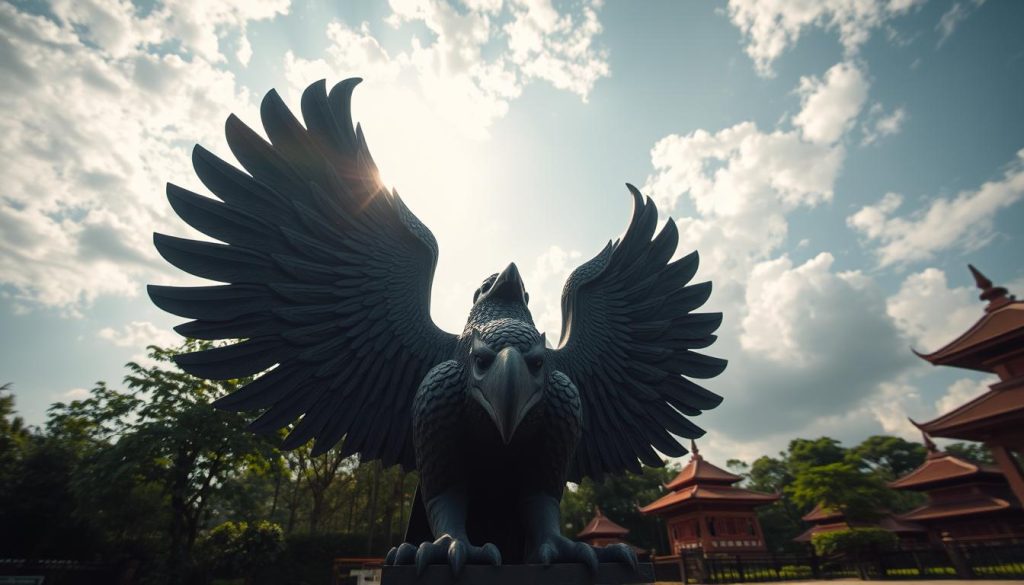
Garuda is seen in India and Southeast Asia through art and dance. The bird-man symbol is found in stone carvings and paintings. It also appears in rituals, showing how myths stay alive in our lives.
Art and Sculpture Representations
Early temples show Garuda in carved panels, often near Vishnu shrines. The Silparatna and Sritatvanidhi guide artists on posture, color, and attributes. Museums house terracotta heads, like the “Head of Garuda,” showing its royal and solar links.
Raja Ravi Varma’s paintings made Garuda familiar in homes. Today, sculptors create Garuda in bronze, stone, and terracotta, making it a common sight.
Garuda in Dance and Performance Arts
Temple theatre and folk shows bring Garuda to life. In Kerala, Garudan Thookam is a ritual where performers dress as Garuda. They move through streets to honor a deity, using costumes and painted faces.
These performances are like living museums. They share stories, gestures, and colors with new audiences. They connect temple art to community rituals.
- Stone reliefs and temple icons follow classical prescriptions for form.
- Paintings and prints spread the image into homes and galleries.
- Ritual dance and Garudan Thookam keep the figure active in public life.
Garuda in Southeast Asian Mythology
The Garuda bird traveled across the Bay of Bengal and became part of many local traditions. Artifacts, temple reliefs, and royal emblems show how this mythic bird changed as it met new cultures. This section explores key adaptations in the region and how the bird got new meanings through rituals and state uses.
In Thailand, the Garuda is seen as a powerful, human-like figure. It’s linked to kingship and is found on official seals, temple gates, and Buddhist icons. Court artists made the bird’s feathers a symbol of status and divine favor.
The role of Garuda in Indonesian folklore
In Indonesia, the Garuda is a symbol of national identity. The modern Garuda Pancasila combines old Javanese models and the Javan hawk-eagle. It represents unity and independence, with its feathers encoding the 1945 independence date.
Across nearby lands, the Garuda takes on different forms. In Cambodia and Cham, it’s seen as a mount and a monster-slayer. In Bali, it’s depicted in dramatic dance masks and the 75-meter Garuda Wisnu Kencana statue.
Other cultures have their own versions of the Garuda. In Myanmar, it’s called Galone and appears in royal regalia. Japan’s Karura and Mongolia’s Khangarid reflect local tastes. Island and mainland communities call it Krud or similar names, showing how sounds change myths without losing their essence.
- Visual diffusion: Khmer, Javanese, and Cham art preserve stylistic shifts.
- Ritual use: temple rites and court ceremonies kept the bird’s role alive.
- State symbolism: national emblems and airlines made the bird a modern sign.
Museums in Jakarta, Bangkok, and Siem Reap showcase these changes. They have everything from small amulets to large temple pediments. These collections tell the story of how trade, conquest, and religious exchange shaped Southeast Asian mythology into a shared, yet unique, cultural heritage.
Modern Interpretations of Garuda
The Garuda has made its way from ancient stories to our daily lives. Experts and museum curators highlight how artifacts like Gupta terracotta heads influence exhibits and public interest. Today, the bird is seen in movies, TV shows, military symbols, company logos, and tourism ads.
Garuda in Popular Media
Movie and TV makers use the bird’s strong image to create heroes and villains. The Hindi serial Dharm Yoddha Garud introduced Garuda to many viewers. Streaming services offer documentaries and dramas that feature Garuda to represent protection or national pride.
- Films and TV shows use the bird’s look to create instant recognition.
- Merchandise, masks, and themed spots help tourism branding, like Wonderful Indonesia.
- Digital platforms share Garuda images with interactive features for deeper engagement.
The Use of Garuda as a National Symbol
Nations and organizations use Garuda as a symbol of pride. Garuda Indonesia uses the bird in its branding to symbolize flight and service. Garuda Pancasila is Indonesia’s state emblem, combining political identity with cultural heritage.
- Thailand and Indonesia feature Garuda in their official symbols.
- The Indian military has units named after Garuda, like the Garud Commando Force and the Brigade of the Guards.
- Professional groups, like the Institute of Chartered Accountants of India, use Garuda in their logos to represent guardianship and trust.
The Garuda’s appearance in media and official symbols shows how myth adapts to today’s needs. This transformation turns mythic images into symbols used by governments, brands, and cultural events. The result is a versatile icon that works in art, politics, and business.
Garuda and Environmental Significance
The Garuda image connects culture with nature. Museums call it a *royal solar bird* when they show how myth and nature history meet. This connection helps people see wildlife’s value beyond looks.
Birds’ role in ecosystems becomes clear when cultural symbols highlight real species. In Indonesia, the national emblem reminds people of the Javan hawk-eagle. This raises interest in raptors.
Such cultural resonance can turn pride into action for protecting habitats.
Conservation groups use familiar icons to explain ecological roles. Raptors control rodents and keep food webs balanced. When communities understand these services, support for reserves and anti-poaching efforts grows.
-
Education programs can pair Garuda imagery with field lessons on birds in ecosystems.
-
Museum exhibits that compare mythic traits to species traits spark curiosity about local biodiversity.
-
Community-led monitoring helps track populations of threatened birds like the Javan hawk-eagle.
Large birds like the Greater adjutant, scientifically known as Leptoptilos dubius, face habitat loss and pollution. Highlighting this species alongside iconic figures builds empathy and urgency for protection measures.
Practical conservation actions include habitat restoration, legal protection, and funding for research. Cultural campaigns can channel donations and volunteers toward these priorities. Partnerships between cultural institutions and conservationists increase reach and effectiveness.
Accessing detailed conservation reports sometimes proves difficult because some databases require interactive access. Simple outreach materials that summarize key points help bridge that gap and keep the public informed.
When myth and science work together, the environmental significance of birds becomes a shared story. That shared story strengthens efforts to protect species, habitats, and the traditions that celebrate them.
Comparative Mythology: Garuda and Other Birds
Garuda is part of a worldwide group of birds seen as powerful and royal. They often fight serpents and are used as divine messengers. Scholars find these common traits across different cultures.
The phoenix is another bird with similar themes. It is known for its cycle of death and rebirth, much like the sun. Garuda and the phoenix both play roles in keeping the world in balance.
In Greek, Norse, and Roman mythologies, birds have similar roles. Zeus’s eagles show his power, while Odin’s ravens carry messages. Roman eagles symbolize the empire’s strength and divine support.
Garuda’s warrior spirit is also seen in the American eagle. The eagle in American culture stands for power, protection, and upholding values. This shows how bird symbols can evolve from myths to national symbols.
Artifacts like Gupta terracotta help scholars see these connections. These objects bring abstract ideas to life, aiding in cross-cultural studies.
Researchers use digital archives and museum collections to study these links. Some databases require modern browsers to show detailed images and records.
By looking at these parallels, we can see how a single idea can change over time and place. Garuda, the phoenix, and the eagle each represent a culture’s view of power, protection, and the sun.
Garuda in Contemporary Spiritual Practices
Garuda is alive in worship today, found in temples, shrines, and folk events. He’s not just a statue next to Vishnu. He’s a real presence in ceremonies that mix old traditions with local customs.
Rituals around Garuda use ancient texts like Silparatna and local guides. Priests put Garuda icons near Vishnu to show protection and blessings for travel. In Kerala, Garuda is asked to fight nāga troubles like sarpa dosham. Museum finds, like Gupta-period heads, help make icons for processions and puja.
Today’s practice blends temple rituals with popular offerings. Street shows and rural devotion bring Garuda to life in festivals. These events show how old traditions meet today’s needs and social settings.
Rituals Involving Garuda
Garuda rituals vary from quick temple prayers to big annual events. Priests say protective mantras and put symbols at Garuda’s feet for family and crop safety. Some temples offer guides and digital manuals for visitors to follow the rites with respect.
- Temple puja aligning Garuda with Vishnu to mark auspicious journeys
- Local rites seeking relief from serpent-related ailments through Garuda’s guardianship
- Public performances that re-enact mythic rescue scenes to reinforce communal identity
Garuda as a Spiritual Guide
Many see Garuda as a spiritual guide, connecting humans to the divine. Pilgrims talk about Garuda giving them courage and clarity in their devotion. In Vaishnavism, he’s seen as Vishnu’s helper and a symbol of loyal service.
In places with many religions, Garuda is also a guardian in Jain and Buddhist traditions. Monks and lay followers see him as a protector, helping them focus their devotion and ethics.
Popular Festivals Celebrating Garuda
Garuda is celebrated in many ways, from small temple rituals to big national events. You can see Garuda in parades, museums, and cultural events. These events mark important dates or seasons.
In Kerala, temple festivals feature Garudan Thookam. It’s a show with elaborate costumes and rituals. People from all over come to see it.
Museums and cultural centers also celebrate Garuda. They show artifacts and have dance performances. This helps people understand Garuda’s importance in art and culture.
Garuda Week is a special time for bird-themed events. There are talks, tours, and workshops for everyone. It’s a great way to learn about Garuda.
National celebrations in Southeast Asia feature Garuda. It’s seen in parades and ceremonies. This shows how Garuda is part of modern life.
- Temple festivals—processions, ritual dances, and community feasts that center local shrines.
- Garudan Thookam—ritual performance in Kerala with dramatic Garuda portrayals.
- Garuda Week—themed weeks combining exhibitions, talks, and family activities.
- Cultural events—state parades and museum programs that highlight heritage and art.
- National celebrations—ceremonial uses of Garuda iconography in official rituals.
Now, you can find festival dates and buy tickets online. This makes planning easier for travelers.
Communities work together to celebrate Garuda. They combine rituals, art, and education. This creates a rich experience for everyone.
Garuda’s Influence on Literature
Garuda has soared from ancient hymns to modern stories. Scholars find the bird in classic texts and today’s myths. This journey explores its role in scripture, museum records, and modern tales.
Classical roots
The Mahabharata tells of Garuda’s role as a powerful ally and moral guide. The Garuda Purana and Vedic poems like the Suparṇākhyāna weave rich mythological tales. These stories have shaped art and museum displays.
Early narratives beyond India
Garuda is also found in Jataka tales and Southeast Asian epics. This shows the bird’s journey across cultures. Indonesian and Thai manuscripts link these stories to a common mythic source.
Garuda in literature today
Today’s novels and TV shows mention Garuda to symbolize heroism and cosmic balance. Scholars study these modern uses to understand myth’s lasting impact. Digital archives and art records help verify these connections.
Interdisciplinary value
Museum records and catalogues support literary analysis. They provide visual evidence for Mahabharata and Garuda Purana scenes. Researchers combine images with text to track changes in how Garuda is depicted.
Research notes for readers
- Explore Garuda’s evolution in literature across time.
- Use art history catalogues to confirm literary scenes visually.
- Be prepared for some digital archives to require special access or JavaScript for image searches.
The Future of Garuda in Global Culture
Garuda studies are expanding into new areas. Scholars and cultural workers are combining art history, anthropology, and text research. They explore how Garuda is seen in India, Indonesia, Thailand, Cambodia, Japan, and Mongolia.
This mix of disciplines is shaping the future of mythology. It also opens doors for more people to get involved.
Trends in mythological studies
There’s a growing interest in comparing different cultures. Teams at universities and museums use online collections to study sculptures, coins, and manuscripts. This helps link Garuda to wider stories about mythology and national symbols.
Fieldwork and digital catalogs help scholars track variations. This makes it easier to teach, exhibit, and publish about Garuda. Short essays and museum labels make myths and legends easier to understand.
The preservation of myths in the digital age
Digital preservation is key in keeping Garuda images and texts safe. Institutions that use clear metadata and open licensing help ensure access. Mobile-friendly archives reach more people.
Design choices matter for who can use these collections. Projects that work well on low-bandwidth connections include more people. This supports the long-term preservation of mythic materials.
Steps include making archives searchable and using linked data. This connects objects, texts, and places. Contributions from Indonesia, Thailand, and India add depth and local meaning. This teamwork strengthens the study and sharing of myths and legends.
The future will combine public history, museum open access, and community research. This blend will shape how Garuda is seen in schools, museums, and online. It will draw a global audience into the study of mythology.
Conclusion: The Everlasting Legacy of Garuda
Garuda is a key figure in many stories and temples. He is the son of Kashyapa and Vinata, and the brother of Aruna. He is also the king of birds and the vahana of Vishnu, fighting against nāgas.
This story is found in the Vedas, Mahabharata, and Puranas. It shows why Garuda is seen as fast, protective, and powerful.
The Gupta terracotta Head of Garuda is just one example of how Garuda has been seen for centuries. His image is found in Hindu, Buddhist, and Jain traditions. He is also seen in state symbols across South and Southeast Asia.
Art like sculpture, dance, and performance keeps Garuda’s story alive. It introduces his meanings to new people.
In today’s world, we can easily find information about Garuda online. This makes his story more accessible to scholars, students, and the public. It helps us understand his role in different religions and as a symbol of nature.
To keep Garuda’s legacy alive, we need to protect texts and support museums. We should also promote cultural exchange responsibly. By looking at his story, symbolism, and how he has been used across cultures, we see his lasting impact.
Garuda’s myth inspires people all over the world. It encourages study, devotion, and creativity. His story will continue to inspire us for many years to come.