The Valravn is a mysterious raven from Danish folklore. It comes from old ballads and beliefs. These stories tell of a knight or warrior turning into a raven, mixing human and bird.
Early ballads like “Valravnen” share dark tales and rituals to lift the curse. Many versions of these stories exist, showing the tale’s enduring appeal.
Experts believe the name “valravn” comes from Old Norse, meaning “of the slain.” This links it to Valhalla and Valkyrie. Others think it might mean a were-raven. The Valravn is also seen in the Ulfeldt family’s crest, blending wolf and eagle.
Online sources are key for learning about the Valravn. But, some might not work on older browsers.
This article will explore the Valravn’s role in mythology and folklore. We’ll look at primary sources and discuss its history, symbolism, and cultural impact. It’s for those interested in mythological creatures and Danish folklore.
Key Takeaways
- The Valravn is a raven figure from Danish folklore and Renaissance ballads.
- Ballad narratives often show humans transformed into ravens through curses.
- The name likely connects to Old Norse terms related to the slain or were-creatures.
- Variants exist in manuscripts and the creature also appears in heraldry.
- Primary sources are central to study, though some require modern browser support.
The Origin of Valravn in Danish Mythology
The Valravn comes from a mix of stories passed down and written records. The main source is the folk ballad Valravnen (DgF 60/TSB A 17). This ballad is from the 1555–1559 Jens Billes Håndskrift. It likely started as a medieval performance for local crowds.
Its story changes in different versions. Some tales link a raven to a knight who takes a maiden. Then, he demands the firstborn child. Others tell of a lover turned into a bird, needing the maiden’s heart-blood to become human again.
A common part of the story is the raven flying at night. This shows its role as a creature of the dark.
Historical texts show many different stories and names. Manuscripts A through F and their later versions have unique details. Vedel’s work from 1590 and later versions up to the 19th century also vary.
Names like Volffuer and Vilden Verne-ravn appear in different texts. They reflect the local speech and how stories were passed down.
Experts argue about what the name Valravn means. Some think it means “of the slain,” linking it to battle carrion. Others, like N. F. S. Grundtvig, see connections to Old English and mythical creatures.
The Valravn is where scavengers meet shapeshifters in Scandinavian myths.
Stories often include stepmothers, magic kin, and breaking curses. These themes are common in ancient myths. They talk about change, fate, and life and death boundaries.
To understand the Valravn, it’s best to compare the ballad with other historical texts. Its lasting presence shows how a single ballad can shape mythology. It influences how ravens and boundary figures are seen in later Scandinavian legends.
Characteristics of the Valravn
The Valravn is a unique creature in mythology, blending bird and human traits. Ballads and stories show it as a raven that walks like a knight or a creature seen in heraldry. These images create a complex picture of the Valravn, rooted in old beliefs and stories.
Physical appearance and traits
- It can be described as a large, dark raven or a creature with wolf and eagle features, like in the Ulfeldt family arms.
- Some tales say it can take on a human knight’s form, mixing bird and human looks.
- Its hybrid form symbolizes crossing natural boundaries.
Behavioral aspects of the creature
- It’s often seen as dangerous, cunning, and drawn to battlefields with unburied dead.
- Stories by collectors like Evald Tang Kristensen link its feeding habits to its rise after war.
- It’s known for its intelligence, occasional speech, and actions that can bring bad luck or harm.
Unique abilities and powers
- Shapeshifting is a key power of the Valravn.
- Some stories say it gains human understanding and strength after eating a leader’s heart.
- Ballads tell of it carrying people across seas or mountains, showing its great power.
- It’s also known for violent acts like pecking eyes or tearing flesh, adding to its gruesome side.
The Valravn is a powerful symbol in mythology, known for its transformation powers and mixed nature. Its mix of violence and intelligence keeps it alive in stories of mythological creatures.
The Role of Ravens in Global Mythology
Ravens are found in stories from around the world. They are seen as symbols of change, warning, and insight. Their black feathers and scavenging ways made them symbols of death and transformation.
Cultures see them as messengers between worlds. This connects local stories to broader mythology.
Comparative analysis with other mythologies
In Norse mythology, ravens are close to the gods. Odin has two ravens, Huginn and Muninn, who bring him thought and memory. In Greek mythology, corvids are omens and messengers tied to Apollo and other gods. Egyptian mythology sees bird figures as psychopomps and signs of the afterlife.
Symbolism of ravens across cultures
- In Scandinavian tales, ravens are linked to battlefields and the fallen. This gives rise to legends like the valravn, mixing scavenger behavior with human fate.
- Native American and Celtic stories often portray ravens as tricksters, shape-shifters, or creators. They blend cleverness with moral ambiguity.
- Across Europe and the Mediterranean, birds in myths are messengers, scouts, or symbols of memory and doom. They reflect shared themes in world folklore.
The raven as a harbinger of death
Ravens were common on battlefields, where they fed on unburied corpses. This fed beliefs that feeding on the dead granted power. Tales say ravens gained speech or malice after such feasts, explaining the valravn and similar creatures.
These images of death coexist with the raven as a guide. In some myths, a raven’s call warns of danger. In others, it escorts souls or carries messages between the living and the dead. This double role makes ravens key in discussions of mortality and memory.
Valravn’s Connection to Norse Gods
The valravn is part of a rich tapestry in Norse mythology. Birds in these stories hold deep meanings beyond the natural world. Ravens, for example, are known to travel between the world of the living and the dead.
Ties to Odin and his ravens
Odin has two ravens named Huginn and Muninn. They fly out to gather news and share it with Odin. These ravens symbolize thought and memory, acting as divine messengers. The valravn, on the other hand, has a different origin and purpose.
Other mythical creatures in Norse legends
Scandinavian folklore is filled with strange beings like draugr, helhest, and shapeshifters. The valravn is seen as a presence in graveyards or battlefields, not as a divine companion. Scholars like Jacob Grimm have linked the valravn to dark forces in folk songs, showing its unsettling role in stories.
Valravn’s significance in Viking lore
Ravens are common in Viking art and symbols, linking them to war and reputation. The valravn’s stories of scavenging on unburied corpses reflect fears about honor and proper burial. In Viking society, burial customs were key to a warrior’s honor.
The valravn connects to Norse themes but is distinct from Odin’s ravens. It highlights human limits, the costs of war, and how animals in stories explain honor, memory, and the unknown.
The Valravn in Folk Tales and Legends
The Valravn is a key figure in many folklore stories and regional ballads. It is seen in both dark and light versions. Tales range from a raven taking a maiden to a raven drinking heart-blood to become human.
Common stories often deal with transformation and loss. A famous tale tells of a raven taking a maiden, her giving birth, and the raven becoming human by drinking heart-blood. Another story tells of a raven as a cursed brother or an enchanted lover, switching between bird and man.
Regional variants show how the tale has been adapted. Manuscripts A through F keep the raven’s image, but names like Volffuer and Salman appear in local versions. Berggreen and others recorded melodies that highlighted both the horror and the redemption. Evald Tang Kristensen found a northern motif where ravens that eat from unburied chiefs gain speech and dark powers, tied to local burial customs.
Influence on Danish folklore is widespread. The Valravn is found in children’s books, modern performances, and music. Bands like Sorten Muld have turned the tale into songs, making it accessible to new listeners. These stories and songs show how old tales inspire new creativity while keeping community memories alive.
- Manuscript diversity reflects oral tradition and local taste.
- Melodies recorded by collectors helped fix variant lines.
- Local burial customs shaped some Valravn attributes.
Scholars and performers keep exploring regional ballads for new insights. The Valravn is a prime example of how myths evolve in culture. Its many forms keep it at the heart of Danish folklore and European ballad studies.
Modern Interpretations of Valravn
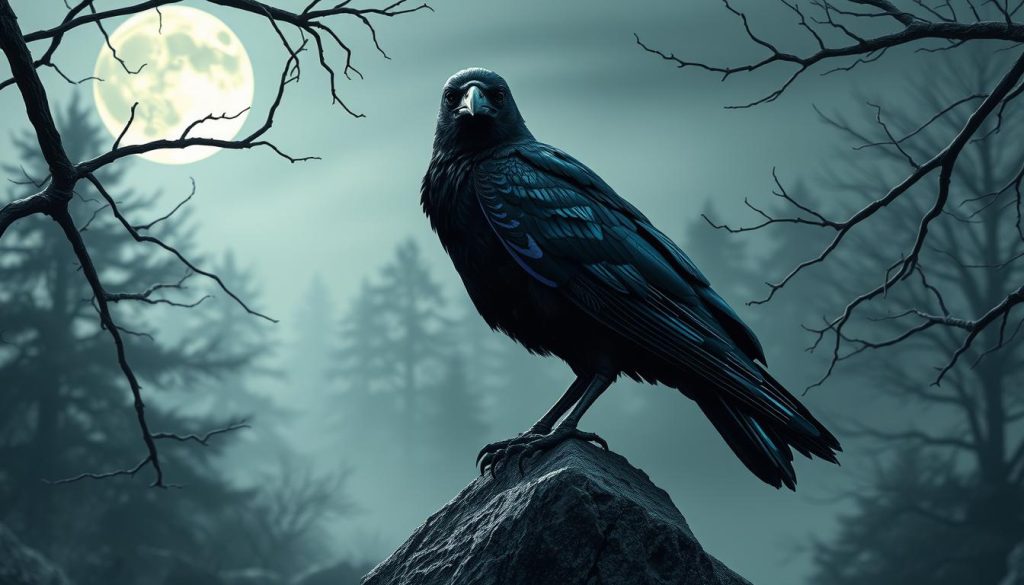
The Valravn modern shows up in many creative fields. This includes music, games, theme parks, and print. Artists, writers, and designers use the creature’s mysterious nature to create eerie and dramatic works. This shows how mythology evolves for new audiences and platforms.
Representation in literature and art
In today’s literature and art, the Valravn symbolizes change and psychological unease. Danish children’s books might use the name in a fun way. But adult writers often place it in dark or speculative settings.
It also appears in 20th-century short story collections and essays about Scandinavian lore.
Appearances in popular culture
- Music: The Faroese group Valravn and bands like Gny, Krauka, and Dronningens Livstykke keep the ballad tradition alive with modern recordings.
- Games: Hellblade: Senua’s Sacrifice (2017) features a Valravn-like god of illusion. Tabletop games like Pathfinder’s Bestiary also include creatures inspired by Grimm’s vilderavn.
- Commercial use: Cedar Point’s 2016 dive coaster named Valravn brings the theme into mainstream entertainment.
The Valravn in contemporary media
Media creators use the Valravn’s eerie presence to set the mood. Electro-folk acts like Sorten Muld made a hit song called “Ravnen” in 1997. This shows the creature’s appeal in modern music. Neopagan magazines like Valravn (2002–2007) also explore its role in living traditions.
The Valravn modern connects old mythology with today’s stories. It helps creators explore fear, change, and the boundary between worlds.
The Valravn as a Symbol of Transformation
The Valravn is seen as a bridge between different states of being. Folk ballads and sagas place it at places where life, death, and identity meet. Rituals like drinking heart-blood or eating from battlefield remains show transformation as both violent and sacred.
Many versions of the ballad use sacrificial acts to start change. Drinking blood, plucking out eyes, or exchanging children are used as triggers. These acts mirror a broader transformation myth where one rite changes body and mind.
The journey from life to afterlife
Kristensen’s story about ravens eating on unburied leaders links to gaining human thought. Eating the dead is a way for birds to become human. Stories show a journey from being a corpse to becoming alive again.
Rebirth themes in Valravn stories
Some tales show cycles of change: humans turn into birds and then back into humans. These rebirth themes reflect resurrection found in many myths. Speech, rites, and bodily fluids are key to returning to life.
- Ballad motifs highlight exchange and loss as change triggers.
- Consumption is both a destructive force and a source of renewal.
- Speech and ritual are repeated in European lore as tools of transformation.
The Valravn is part of myths that use physical acts to show inner change. Its story mixes horror and hope, showing sacrifice can lead to new identity. Readers see a complex tapestry of mythology symbolism and a transformation myth that keeps returning in tales of rebirth.
The Valravn in Environmental Context
Understanding the valravn starts with mixing old tales with modern science. In medieval Denmark, people saw ravens and linked them to magic. This mix of myth and nature is fascinating.
Ravens as scavengers and their ecology
Ravens are smart and eat almost anything. They were often seen near dead bodies. This is why they became symbols of death in stories.
Valravn’s place in the ecosystem
The valravn story is based on ravens’ real role in nature. They clean up dead animals, helping the environment. This important job made them a key part of folklore.
Conservation of mythical significance
Keeping the valravn alive needs both old stories and new actions. Archives and festivals help keep these tales alive. By learning about ravens, we can protect them and their stories.
- Environmental mythology grounded in observation makes mythological creatures easier to respect.
- When people learn about ravens ecology, fear often gives way to curiosity.
- Conservation efforts benefit when cultural value and wildlife science work together.
Seeing the valravn as part of nature helps us care for it. This way, we can respect our traditions and protect the birds that inspired them.
Valravn and the Witchcraft Connection
The Valravn is a figure of both fear and wonder in folklore. It is described as a raven that can talk and eats human hearts. Scholars like Jacob Grimm believe it is connected to evil beings in folk tales.
Association with witches in folklore
The Valravn’s actions in stories are similar to witchcraft tales. It changes forms, appears at important life events, and challenges social norms. These stories were seen as signs of magic or meddling with nature.
Valravn as a familiar spirit
Some stories show the Valravn as a helper for those who practice magic. The idea of familiar spirits made this concept clearer. Animals were seen as assistants in spells, linking ravens to magic.
Impact on witch trials and beliefs
Even though the Valravn is rarely mentioned in court records, its stories played a role in witch trials. Tales of shape-shifting and animal malice fueled fear. These stories helped explain misfortune, making witchcraft accusations seem believable.
Scholars warn against mixing ballads with court records. Valravn stories show deep fears about death, identity, and power. They show how myths and stories about magic and spirits shape our culture.
The Valravn in Modern Witchcraft Practices
Today, people use the valravn as a link between old stories and new beliefs. It shows up in neopagan groups, folk magazines, and music. It inspires creativity, not strict rules.
Rituals involving ravens
Witches and pagans use raven symbols for divination and connecting with ancestors. They value raven’s smarts and ability to change. Their rituals are symbolic, focusing on acts that carry deep meaning, not harm.
The significance of the Valravn today
The valravn is a key part of exploring Norse spirituality today. It represents the in-between and complex moralities. Artists and spiritual groups use it to talk about sacrifice, change, and crossing boundaries.
Inclusivity of the Valravn in current beliefs
Modern groups rework dark themes to fit today’s values. They see heart-blood as a symbol of change. This shows a dedication to welcoming everyone and respecting different backgrounds.
- Modern interpretations come from ballads, Grimm’s work, and scholars like Grundtvig.
- Guidelines for practice often focus on authenticity and safety, separating folklore from new ideas.
- Many groups emphasize consent, safety, and respect for cultures when using mythological figures in rituals.
Variations of the Valravn in Literature
The Valravn shows up in literature in many ways. It changes with time and the audience. You can find it in 19th and 20th century books, Danish children’s stories, and translated ballads. These stories help mythological creatures move from spoken tales to written ones.
Key books that feature the Valravn
- Grundtvig’s Danmarks Gamle Folkeviser saved ballad texts for later writers to use.
- Berggreen’s collections gave notes and tunes that inspired artists and writers in folklore.
- Early 20th-century short story collections, like Stuckenberg’s Valravn og Sol, made the Valravn a modern character.
Literary analysis of portrayals
Valravn stories often deal with change, sacrifice, and forbidden acts. These themes shape the characters’ paths. They move from victims to transformers and sometimes rescuers. When the heroine dies or a child is offered, the story’s mood shifts from sad to healing.
Impact on narrative structures
The Valravn acts as a spark that leads to big choices. It pushes characters on journeys across sea and mountain. This creates quest and rescue stories seen in myths. The Valravn also brings up moral questions that make the story more tense.
Today, fiction and games use the Valravn for complex villains or challenges. Games like Hellblade and systems like Pathfinder use its elements in modern fantasy. This shows how the Valravn remains a versatile tool for storytellers exploring mythological creatures.
The Valravn in Festivals and Celebrations
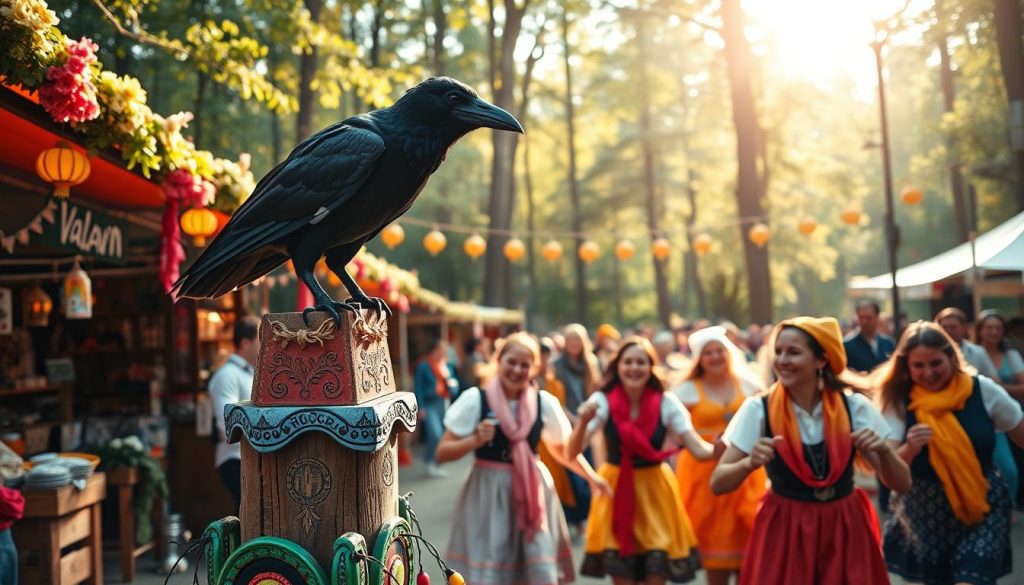
The Valravn is a key part of many events where music and myths come together. Performers and folk groups use old ballads to create special events. These events bring people together and teach them about Danish folklore and Scandinavian traditions.
Local celebrations honoring old ballads
- Music nights feature the ballad “Valravnen” in concert programs by groups such as Krauka and Sorten Muld, keeping melodies alive at folk festivals.
- Regional storytelling sessions bring variations of the tale to life during seasonal gatherings like fastelavn recollections recorded in fieldwork.
- Manuscript displays and archive evenings present sources such as Jens Billes Håndskrift, inviting the public to trace the ballad’s history.
Traditional customs and practices
- Community sing-alongs let elders teach younger people melodies collected by A. P. Berggreen, preserving song forms within community traditions.
- Revivals in magazines and folk clubs encourage new arrangements of the ballad, linking heritage to contemporary performance.
- Folk-music festivals include medieval and ballad repertoire so mythology celebrations remain part of public programming.
Impact on community identity
- Regions with strong ballad roots use Valravn variants as cultural markers for heritage tourism and local pride.
- Concerts and archive shows create year-round interest that supports museums, events, and volunteer networks.
- Stewardship of recordings and manuscripts offers a practical route to preserve the tale within community traditions and to inspire future festivals.
The Psychological Symbolism of the Valravn
The Valravn is a symbol of the boundary between life and death. It fascinates scholars and readers who seek to understand its dual nature. Through stories, communities find ways to confront their fears and hidden memories.
Archetypal echoes
In Jungian psychology, the Valravn is seen as a shadow figure. It combines bird and human features, blending life and death. This archetype emerges when we try to hide our true selves.
Fear made visible
Ballads about the Valravn show its power to evoke fear. They describe scenes of heart-blood consumption and flesh tearing. These images help people express their deep-seated fears and anxieties.
Myth interpretation in practice
Valravn stories reflect societal fears of death and chaos. They offer a way to heal through symbolic resolution. Whether it’s through restoration or change, these tales help us make sense of suffering.
Modern readings and healing
Today, media like Hellblade use Valravn imagery to explore inner battles. These stories mirror the journey of therapy. They provide metaphors for overcoming grief, setting boundaries, and healing.
Practical uses
- Discuss trauma through story to reduce shame and isolation.
- Use archetypes as a scaffold for safe emotional exploration.
- Encourage symbolic reframing instead of taking violent motifs literally.
Conclusion: The Enduring Legacy of Valravn
The valravn is a key part of Danish folklore. It’s found in ballad manuscripts by people like Grundtvig and Evald Tang Kristensen. This creature, with its mix of raven and human, connects to themes of sacrifice and rebirth.
Scholars like Jacob Grimm have studied its ballad variants. They’ve found themes like shapeshifting and transformation. This work, along with musicians and game designers, keeps the valravn interesting today.
Future studies could look into Germanic etymology and manuscript work. They could also explore how raven behavior shapes folklore. By doing this, we can understand the valravn’s role in stories of transformation and power.