Writers, game designers, and content buyers often want creature-lore that feels both fresh and durable. This introduction frames the key buying problem: choose a creature that can carry a long story and still evolve with culture.
The guide focuses on practical choices, not academic debate. It defines terms, offers quick comparisons, and gives decision tools to match creatures to novels, campaigns, or pitches.
Some legends become what this article calls a “folklore fossil”—stable, museum-like, and hard to reshape. Others stay active, ripe for modern adaptation and future growth.
Readers will learn tiered decision models and simple risk/reward checks to pick creatures that suit current U.S. trends in pop culture and adaptation pipelines. The aim is clear: help buyers choose creatures that keep gaining relevance over time.
Key Takeaways
- Clear, practical definitions help pick suitable creature types.
- Use tiers and risk/reward thinking to speed selection.
- “Folklore fossils” are stable legends that resist change.
- Active creatures offer more long-term adaptation value.
- This guide targets U.S. market trends and future relevance.
Why this comparison matters for Fantasy readers and buyers in the US
Whether a creature is a headline-hungry cryptid or a time-tested myth changes how a project is sold, paced, and received.
Cryptid hype vs. myth canon: what audiences are actually buying today
The market treats cryptids like late-breaking news—viral, quick to share, and often short-lived. Producers can use that buzz to spark curiosity, but not every spike becomes lasting value.
Think of the ESPN-style split between “buzz vs. noise.” Fantasy football managers ignore every passing rumor; smart buyers do the same with cryptid stories. Some items move the dial. Others are just loud.
How contemporary folklore shapes adaptations
Mythological creatures act as reliable brands: they arrive pre-recognized and bankable. Cryptids are upside picks—risky but highly shareable if packaged right.
- Streaming and imprints favor legible canon unless a cryptid is tightly framed.
- Fast distribution—clips, podcasts, TikTok—can push niche lore into mainstream attention.
- Choosing the wrong category creates mismatched expectations for buyers and audiences.
Cryptids and mythological creatures defined without the gatekeeping
Legends split into two practical camps for creators: those driven by fresh reports and those rooted in long cultural memory. This distinction helps buyers pick a creature that fits tone, risk, and shelf life.
What makes a cryptid a cryptid
A cryptid is claimed based on sightings, local reports, or recurring rumors. It lives in an ongoing evidence culture—maps, eyewitness angles, and recent clips keep interest alive.
What makes a creature mythological
A mythological creature sits in tradition. It survives through texts, ritual, art, and repeated retellings. That history gives it canon: family trees, moral roles, and cultural weight.
Where modern legends fit
Urban legends and creepypasta act as fast folklore. Viral threads and paranormal headlines function like highlight reels: they create momentum but rarely offer deep stability.
- Buyer signals: cryptids = maps and eyewitness detail; myths = pantheons and symbolism.
- Analogy: a myth has a long résumé; a cryptid has hot clips — like scouting in football, both win, but differently.
When does a legend become a folklore fossil?
A creature becomes “archived” the moment storytellers prefer the same familiar beats over new angles.
The moment a story stops evolving and starts being archived
Folklore fossil is a practical label for when a legend shifts from lived tradition to display piece.
That happens when retellings prize recognition over discovery. People recycle lines, scenes, and visuals because audiences want the comfort of the known.
How institutions, pop culture, and repetition fossilize a creature
Museums, textbooks, and franchise tie-ins lock traits into a template. Reference wikis and canonical guides do the same.
- Institutions create authoritative versions.
- Franchises repeat profitable beats.
- Media cycles turn myth into predictable news items.
This process is profitable but limiting. Once fixed, surprises need deliberate subversion rather than natural discovery.
Workaround: creators can keep a fossilized creature feeling alive by changing context—place, politics, or ecology—rather than only appearance.
Fantasy content trends to watch in the future
As attention windows shrink, distinguishing fleeting hype from lasting story value becomes essential for creators. The next decade will favor faster trend cycles, micro-fandom creatures, and hybrids born where myth meets the internet.
Why “latest buzz” can be noise, and how to spot what will stick
Not every viral hit turns into a durable asset. Use stickiness indicators: cross-regional variants, a strong visual silhouette, flexible motives, and built-in mystery that invites reinterpretation.
What recency-driven storytelling borrows from modern fantasy football news cycles
The buzz vs. noise pattern shows up in creature lore the same way it does in fantasy football. Recency bias inflates whatever just trended, even if it lacks format adaptability.
- Cryptids thrive with steady “evidence” drips; myths grow via expanding world context.
- Chasing only the latest news can shorten a book’s or campaign’s shelf life.
- Best picks survive both hype and canonization: memetic spark plus deep story bones.
Forward-looking takeaway: buyers should favor creatures that perform in quick cycles and scale into canon. That balance yields short-term buzz and long-term value.
Buyer’s guide: How to choose the right creature-lore for your next game, book, or campaign
Picking the right creature should feel like choosing a position on a roster: role matters more than fame. This short guide helps buyers match creature type to product length, pacing, and audience taste.
Best for fast-paced games and short arcs
Cryptids win when immediacy matters. A sighting premise creates motion, tension, and investigation beats that fit quick sessions or punchy short arcs.
Best for epic worlds
Mythological creatures bring built-in factions, rituals, and politics. They support long-form plotting and consequences across chapters, seasons, or campaign maps.
Best for mystery tables
Choose hybrids that blend cryptid evidence with mythic depth. They are familiar enough to hook players but uncertain enough to keep clues and reveals interesting.
Best for horror-leaning fantasy
Ambiguity is the tool. Use conflicting accounts, incomplete evidence, and unreliable narrators to sustain fear without over-explaining the monster.
- Buyer checklist: desired pacing, clarity of in-world rules, how much lore to prebuild, and how explainable the creature should be.
- Match role to tone: chase-capable cryptids for urgency; deep-canon myths for stakes and politics.
- Think like a football coach: you don’t need the flashiest pick—pick the role-player that fits your system.
Rankings mindset: building tiers of creatures like draft boards
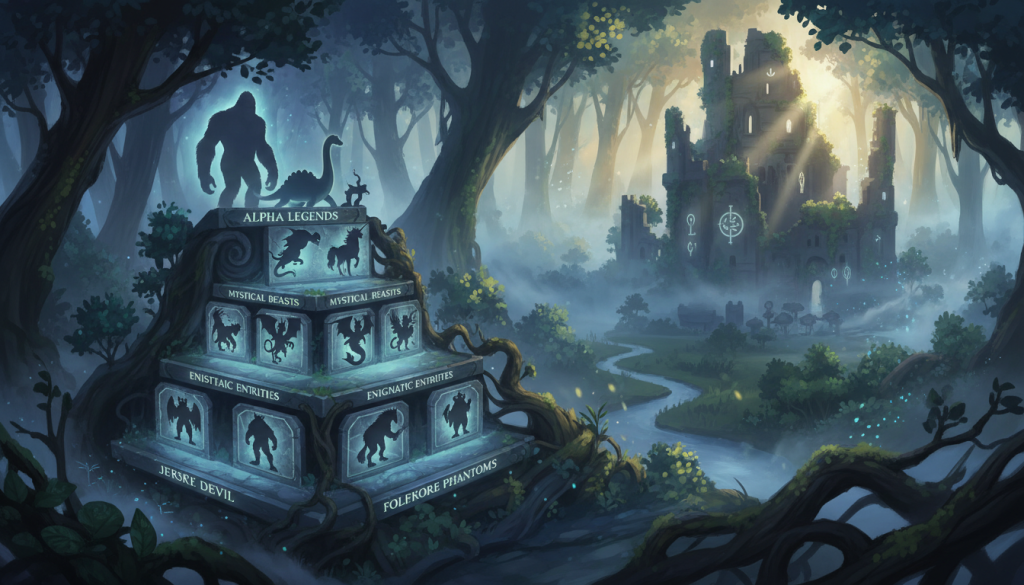
A rankings approach makes creature choice repeatable and defensible. Instead of picking by vibe, buyers sort by story utility: combat, mystery, politics, travel, and horror.
Using “Top 300” thinking to sort creatures by story utility
The Top 300 idea borrows from draft prep: list every candidate and score them by expected impact. Early ranks are reliable anchors; late ranks are speculative sleepers.
Ceiling vs. floor: spectacle creatures vs. versatile creatures
Ceiling creatures create show-stopping set pieces. They sell visuals and headlines but can be hard to reuse.
Floor creatures slot into many scenes. They offer steady value across chapters and sessions.
ADP-style popularity: what’s overused, what’s undervalued, what’s a sleeper
ADP-style tracking warns buyers when a creature is popular because of name recognition, not fit. Look for undervalued options with regional hooks or flexible motives.
- Make tiers, not one-off choices.
- Calibrate ranks for your league—YA, adult, or tabletop demand different traits.
- Pursue sleepers to maximize storytelling ROI.
Start or sit your monster: fitting creatures to your team, tone, and table
Picking when to introduce a creature can make or break a campaign’s momentum. The decision should weigh table comfort, how fast the plot must move, and the role the monster will play.
“Start ’Em, Sit ’Em” logic for plot pacing and player comfort
The analogy from fantasy football shows that a strong pick can be a bad matchup for the week. The same applies to monsters: a visually iconic beast may steal focus when subtle dread is needed.
Rule of thumb: use simple criteria—intensity, reveal speed, and player consent—to decide whether to start a creature now or hold it.
Bench the obvious: when a famous creature hurts suspense
Famous monsters can make outcomes predictable. When audiences assume they know weaknesses, suspense erodes quickly.
- Save famous creatures as late reveals to protect mystery.
- Use variant lore, regional rules, or shifted goals to refresh familiarity.
- Assign every creature a role: opener, mid-boss, recurring threat, or final antagonist.
Practical prompt: before each session, the buyer should ask: does this scene need mystery, action, dread, or wonder? Then choose to start or sit the monster that best fills that slot.
Availability is everything: why some legends play more “down the stretch”

Long campaigns reward creatures that can reappear without feeling forced or cheap. In play and prose, the best ability is availability: a monster that can return preserves stakes and saves writerly energy.
“The best ability is availability” applied to creature design and campaign longevity
Availability means believable reasons to survive, regroup, or migrate. Cryptids often have built-in availability—new sightings, fresh witnesses, shifting habitats keep them alive in the news cycle.
Mythic beings usually need stronger in-world logic. They return via cults, rites, or prophetic threads. That extra work is fine when the creature anchors political or spiritual arcs.
Rotations, downtime, and recurring antagonists that keep showing up
Design a rotation to avoid fatigue. Alternate sharp, single-scene spectacle with steady, returnable antagonists.
- Rotate types: cryptid hunt → mythic politics → hybrid mystery.
- Use downtime: rumors, partial evidence, and local reports to sustain tension.
- Pick one durable creature for multiple arcs and one spectacle for a signature encounter.
- Give recurring foes plausible goals so their returns feel earned.
Start smart: a dependable antagonist keeps a campaign moving; a showpiece monster wins moments. Balance both to avoid burning creativity on act one.
League and format fit: adapting creatures across leagues, players, and games
Not every monster suits every stage; format constraints force practical swaps. Buyers should judge creatures by page count, rating, mechanics, and how much ambiguity the audience tolerates.
Premier league-style spotlight: creatures that dominate the headline match
Premier league monsters sell themselves. They carry marketing, anchor climaxes, and simplify visuals for trailers and covers.
These beasts need clear stakes and a strong silhouette so they read on screen and in copy.
Different leagues, different rules: YA, adult, TTRPGs, and video games
YA benefits from cleaner moral lines and tighter explanations. Adult fiction can hold ambiguity and slow reveals.
TTRPGs need interactive clues and modular encounters. Video games demand readable mechanics and quick silhouette recognition.
Players and roles: how parties, teams, and NPCs change what creature works
Combat-heavy parties favor creatures with tactical hooks. Investigation groups need evidence chains that reward deduction.
- Headline pick: one-show, high-impact monster for promos.
- Supporting cast: repeatable foes that build world texture.
- Adaptation tips: swap sightings for quest logs, oral lore for in-world manuscripts, and scale threats to the team.
Commercial takeaway: buy the creature that ships cleanly into the chosen league. The right fit saves time and increases long-term value.
DFS and betting tips applied to creature picks: managing risk and payoff
Treat creature selection like a DFS lineup: balance sure starters with high-upside flyers.
Pay up when you need instant recognition and a built-in climax engine. A marquee myth supplies scaffolded lore, clear stakes, and marketing pull. It reduces creative overhead and sells on covers and trailers.
When to stream a lesser-known cryptid for a one-shot or side quest
Stream cryptids when novelty and local texture matter. Use them for one-shots, side quests, or episodic arcs where surprise beats pedigree. They add fresh hooks without long-term commitments.
Stacking synergies: ecosystems, cults, pantheons, and regional clusters
Stack creatures that share ecosystems or cult ties to create believable webs of cause and effect.
- Pair a safe myth pick with a risky cryptid and a hybrid “glue” creature.
- Use shared cults or habitats so clues cross-pollinate and feel earned.
- Let rankings guide portfolio balance: one anchor + one upside + one connector.
Quick rule: decide the desired payoff—wonder, fear, mystery, or spectacle—then choose the category that reliably delivers it. Ignore short-term news spikes unless they fit tone and mechanics.
Conclusion
Cryptids feel alive because reports and sightings keep them moving. Mythological creatures feel anchored by tradition and continuity. That core split guides buyers toward different payoffs.
Use the folklore fossil idea as a tool, not a verdict. Fossilization gives clarity and brand lift, but it can limit surprise unless the context changes.
Choose cryptids for speed and uncertainty, myths for depth and worldbuilding, and hybrids when mystery matters. Ambiguity works best for horror-driven arcs.
Trendiness is not the same as long-term utility. The smartest picks balance novelty with adaptability and availability.
Next step: build a short tier list for the next project, then sanity-check it against format fit, availability, and risk/reward to see what will keep readers turning the page.