This service directory helps creators turn sacred-animal symbolism into practical worldbuilding tools.
It frames the jaguar, quetzal, and feathered serpent as story engines that power politics, faith, magic, and conflict. The guide is practical, not an academic history. It gives clear patterns—icons, factions, quests, and power structures—that scale to an empire narrative.
Writers and designers can treat these animals as literal beings, divine avatars, or institutional symbols depending on the plausibility rules they choose. The aim is to create coherent systems of legitimacy: priesthoods, relic economies, public ritual, and conquest that feel lived-in.
Use the motifs across a season of campaigns or a full novel arc to drive character choices and faction conflict. Later sections turn common utilities—rankings, tiers, and start/sit-style options—into creative decision tools for selecting creatures, champions, and story beats.
Key Takeaways
- Jaguar, quetzal, and feathered serpent serve as scalable story engines.
- Directory focuses on usable worldbuilding patterns, not exhaustive history.
- Creators may choose literal, symbolic, or institutional roles for animals.
- Designs should tie into legitimacy: priests, relics, and public ritual.
- Materials support a season-long campaign or a novel-length arc.
Directory Overview: Mesoamerican Sacred Animals for Fantasy Worldbuilding
Think of the directory as a toolkit that maps animal symbolism to narrative roles, visual cues, and mechanical hooks.
What each listing includes
- Lore snippet templates for quick flavor text and origin myths.
- Iconography notes with visual motifs designers can adopt.
- Encounter seeds and conflict escalators ready for chapters, episodes, or sessions.
- Faction hooks and plug‑and‑play prompts tailored to stories and games.
How listings are organized
Users can browse by animal, narrative function, subgenre tone, or media format. Filters speed up discovery and match the listing to the project’s needs.
Navigation paths make it simple to find a guardian archetype or a state-level myth system.
Who this serves in the United States
The directory targets novelists, screenwriters, comic artists, indie game studios, tabletop GMs, and educators building creative assignments.
Practical benefit: it helps creators make faster, better decisions—like how leagues organize rosters—without getting bogged down in research.
Whether a user wants a single guardian creature or a state ideology shaped around sacred animals, the listings scale to fit light touches or full setting builds.
How Sacred Animals Shaped Power, Identity, and “Empire” Stories
When animals carry authority, rituals and uniforms become technology for governance and war. In a fantasy setting, these symbols do more than decorate banners; they structure consent, punish dissent, and make rule feel inevitable.
Symbols as political tools: banners, regalia, oaths, and public rites act like civil machinery. Courts cite animal omens. Garrisons wear pelts as rank. Markets trade relics that fund priesthoods.
Divine legitimacy made dramatic: trials, sanctioned duels, and visible omens let leaders claim sacred right. Those spectacles resolve disputes and escalate stakes in ways readers will accept.
Institutions that bind the symbol:
- Elite warrior orders sworn to an animal sigil.
- Royal genealogies traced to a divine avatar.
- Temple economies that control trade and fortresses.
Characters become tactical players—priests, generals, artisans, and rebels—each using the icon for advantage. Think of the roles like a football matchup: some symbols drive offense and conquest, others anchor defense and law. Tying symbols to consequences keeps the setting from feeling like a shallow “cool creature” flourish.
Featured Listing: The Jaguar as Night, War, and Royal Strength
The jaguar functions as a living emblem of night power, where stealth and royal force shape law and war.
Use this listing to equip rulers, temples, and military orders with a coherent set of abilities, costs, and visual cues that fit a fantasy setting.
Common roles and quick templates
- Jaguar-helmed monarchs: rulers claim the pelt as legal authority and a fear aura that silences dissent.
- Temple guards and oathbound assassins: secretive orders that grant silent movement and vision in darkness.
- Border scouts: nocturnal watchers who use shock tactics and ambush to secure frontiers.
Start here: implementation path
Define what the jaguar gives—visions, royal charisma, stealth—and what it demands: vows, isolation, or ritual hunts.
Icon-ready motifs and encounter seeds
- Rank markings: spot patterns and obsidian-claw sigils.
- Color palette: night-sky blues, deep blacks, and blood highlights for throne rooms.
- Session beats: a dark coronation trial, a stolen pelt relic, or a rival order challenging legitimacy in a single game session or multi-arc campaign.
Responsible depiction: ground jaguar power in institutions and choices so it reads as social authority, not a random cosmetic power-up.
Featured Listing: The Quetzal as Sky, Beauty, and Sacred Status
The quetzal listing elevates color and ceremony into a social engine that rewards beauty with real power.
Use feathers and spectacle to signal legitimacy, open diplomatic doors, or mark a person as chosen. In this model, visual display replaces brute force as the main currency of influence.
How to use feathers, color, and rarity as plot devices
Core concept: feathers act like regulated artifacts. They can be taxed, forged, confiscated, or offered as proof in succession disputes.
- Status engine: The quetzal becomes a premier league marker—only elites wear full plumes. This unites provinces or creates resentment when hoarded.
- Narrative economy: Treat each feather, favor, or blessing as measurable points in social accounting. Characters earn, lose, and trade them.
- Visual hooks: High-saturation palettes, feather mosaics, and ceremonial masks read clearly across comics, animation, and key art.
- Plot seeds: Smuggling rings, counterfeit feathers, romance over gifts, and heist missions where beauty equals power.
Practical tip: Define clear rules for how feathers move through law and market. That makes beauty a playable mechanic with visible stakes in a fantasy setting.
Featured Listing: The Feathered Serpent as Order, Knowledge, and Awe
The feathered serpent serves as a civic spine: it orders calendars, law, and the rules that hold an empire together.
Designing a mythos that fits epic stakes
Define jurisdiction. List what the serpent governs—knowledge, winds, seasons, fate, and language—and what it forbids: chaos, lies, and broken oaths.
Scale matters. Mark which doctrines affect everyday life and which spare only rulers or temples. That clarifies stakes for campaigns and novels.
Creating temples, priesthoods, and magic-system rules
Build a temple blueprint: ranks, initiations, forbidden texts, relic custody, and public rites.
- Ranks: novice, scribe, archivist, and high oracle.
- Costs: ritual time, memory-loss, or community service to learn sacred arts.
- Limits: each miracle needs a public record or oath to hold—no private loopholes.
Antagonist or ally: placing the serpent on the power map
The serpent can back rulers, outmaneuver warrior cults with bureaucracy, or act as a prophetic antagonist.
Comparative tools: use simple rankings to compare miracles, relics, and clerical offices across different leagues and campaign styles.
That keeps magic consistent and makes ideological conflict playable across long projects.
Fantasy Genre Fit: Turning Myth into Playable Worlds
Making myth act like rules gives creators a clear promise to the audience. It helps readers and players know what to expect and why the world behaves the way it does.
Using magic and supernatural elements as core story engines
Decide how literal sacred animals will be: visible divine beings, unseen patrons, or symbolic institutions with magical teeth.
Each choice changes gameplay: visible gods invite quests and miracles; hidden patrons create mystery and favors; symbolic institutions yield relic economies and law-bound magic.
How tone and plausibility separate genres
Fantasy trades strict scientific plausibility for wonder and meaning. It differs from science fiction, which leans on technical rules, and from horror, which centers dread and helplessness.
Keep consistency across a season by clarifying limits early. State what miracles cost, who enforces oaths, and what counts as proof.
- Rule the stakes: make omens enforceable, not random.
- Frame the play: the same divine sign can read heroic, ominous, or intimate depending on tone.
- Pick a promise: tell the audience if the world rewards wonder or explains it away.
Think of tone like a football playbook: the same “play” looks different when framed for triumph, tragedy, or small-scale drama.
Choose a Narrative Mode for Your Setting
Select a narrative mode that sets how readers and players learn the rules of a sacred-animal world. This choice shapes pacing, point-of-view, and how symbols convert into plot mechanics.
Portal: an onboarding path
Portal mode brings an outsider into a realm where jaguar, quetzal, and serpent symbolism is law. The protagonist discovers rules with the audience.
Use this for introductions and gradual reveal. Quick prompt: a traveler steps through a market gate and finds a quetzal feather acts as legal ID.
Immersive: cultural depth first
Immersive mode treats sacred animals as unquestioned cultural foundations. Stories focus on ritual, politics, and consequence rather than explanation.
Quick prompt: a temple archive shows the feathered serpent’s decree rewriting town customs overnight.
Intrusion: sudden disruption
Intrusion mode drops the sacred into an ordinary world. That shock tests institutions and forces rapid adaptation or collapse.
Quick prompt: a jaguar oath binds a mayor, which triggers a legal crisis and a race to undo the vow.
Design note: each mode changes how people play fantasy and how campaigns run. Choose portal for tutorial-style entry, immersive for deep-sim culture play, or intrusion for disruption-driven quests in tabletop and video games.
Directory Categories Across Fantasy Media
The catalog groups examples by format so a scene can move smoothly from prose to storyboard to gameplay. This helps creators pick techniques that match production realities, whether writing a chapter, designing a frame, or scripting an encounter.
Literature, comics, and manga-inspired sacred-animal designs
For prose and sequential art, the directory suggests tools for pacing and motif. Use internal monologue, recurring visual beats, and symbolic panel layouts to show ideology without long exposition.
Short templates explain how a quetzal plume reads as status in a paragraph or a splash page. Writers get clear prompts for emotional beats and ritual scenes.
Film, television, and animation references for visual storytelling
Screen-ready notes focus on silhouette, color, and iconography. Designers get advice for costumes, temple sets, and props that read instantly on camera.
Tabletop RPG and video game adaptations for campaigns and quests
This column translates motifs into mechanics: quest loops, faction reputation, boss design, and loot tied to animal themes. It shows how a temple initiation becomes a tutorial mission.
What players need: readable rules, fair constraints, and rewards that reinforce sacred identity rather than feel generic.
- Match medium: choose prose beats, visual shorthand, or interactive hooks.
- Reuse scenes: convert a short story chapter into a storyboard or mission.
- Test stakes: ensure mechanics reflect ritual cost and meaning.
Browse by Subgenre and Tone
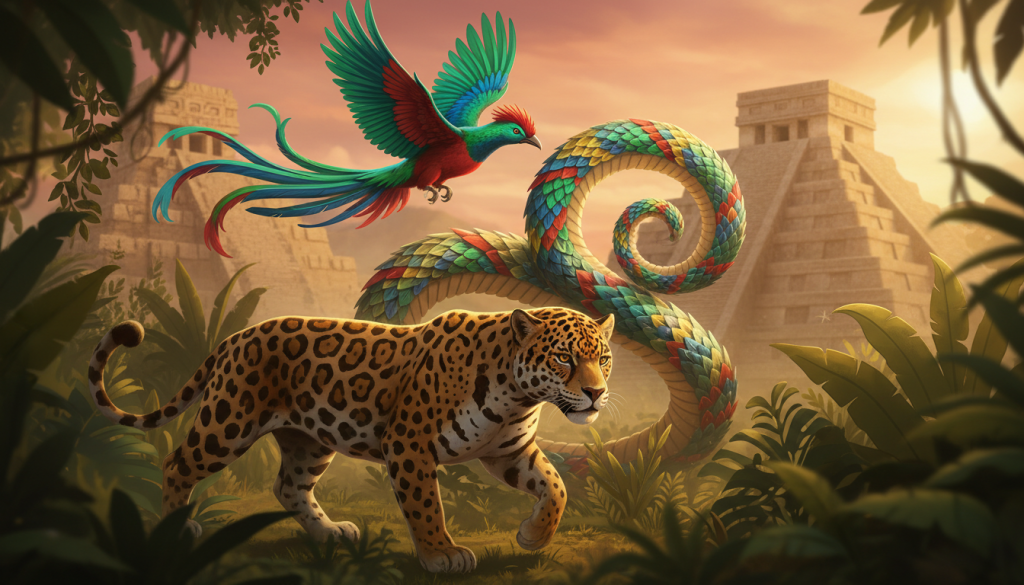
Creators can match sacred-animal motifs to a story’s emotional lane to keep tone consistent across chapters or episodes. This guide shows how each subgenre shifts an animal’s function so symbols feel meaningful and earned.
High and Heroic
Empire-scale legends: use the feathered serpent to anchor calendars, dynasties, and continent-wide prophecy.
Relics read as law, not jewelry. Rituals decide succession and war. This subgenre suits epic stakes and formal spectacle.
Dark and Weird
Omen-forward: the jaguar can become a dread authority, quetzal plumes a fragile spark for violence, and the serpent a vast, impersonal bureaucracy.
Tone leans toward dread, ambiguity, and uncanny consequences.
Urban and Contemporary
Modern rediscovery: sacred animals surface in neighborhoods, courts, and storefronts across the United States.
They change institutions and personal identity in quiet, local ways.
Mythpunk and Folklore-forward
Remix with purpose: reinterpret motifs by focusing on function—power, law, beauty, knowledge—rather than surface aesthetics.
That approach helps creators innovate while staying respectful to source meanings.
- Use subgenre to set reader expectations.
- Pick a tonal “premier league” so a season of releases feels coherent.
- Let the chosen tone decide what a symbol costs and what it grants.
Tools to Play Fantasy: Leagues, Team Builds, and Campaign Parties
Translate player-roster logic into worldbuilding rules so teams of champions feel meaningful and tactical. This section gives quick tools creators can drop into a campaign or story to structure parties, progress, and competition.
Team and party archetypes inspired by animal traits
Design party roles around jaguar, quetzal, and feathered-serpent strengths.
- Jaguar-forward: stealth, frontline intimidation, ambush tactics.
- Quetzal-forward: diplomacy, mobility, social leverage.
- Serpent-forward: lore, crafting, bureaucratic magic and rituals.
Points-style scoring for quests and reputation
Create a simple points system to track what the empire values. Points make rewards predictable and conflicts measurable.
- Relic recovery: 5 points
- Ritual completion: 3 points
- Public reputation events: 1–4 points depending on reach
- Taboo adherence (or violation): ±2 points
- Political influence (favors, titles): variable bonuses
Rankings templates to compare creatures, champions, and relics
Use a compact rankings grid to keep power consistent across long arcs. Compare offense, defense, lore, mobility, and cost.
- Tier A: high impact, rare cost
- Tier B: balanced utility, moderate cost
- Tier C: situational benefit, low cost
Result: creators get plug-and-play team recipes, fair challenges, and clear progression. These tools help a group or league design balanced encounters and keep sacred themes central to play.
Seasonal Updates and Fantasy Buzz for the Present Moment
Keeping a steady seasonal plan helps creators spotlight what matters and ignore fluff. A clear cadence turns one-off lore into recurring beats readers expect.
How “buzz vs. noise” improves roster picks and story choices
Borrow the ESPN idea: identify hype that matters and separate it from distracting chatter. Buzz is a device that advances plot or character. Noise is detail that never affects stakes.
- Mark candidates: tag allies, relics, and scenes with upside and risk.
- Measure impact: did an element change a scene, law, or relationship?
- Prune regularly: remove lore that only decorates and never resolves.
Start ’em, sit ’em logic adapted for sacred-animal allies and champions
Treat each chapter or session like a lineup decision. Ask: will this animal best serve the arc this week?
- Start the jaguar for war arcs and ambush scenes.
- Start the quetzal for diplomacy, spectacle, and social leverage.
- Sit the serpent when the plot needs secrecy or slow-burn bureaucracy.
This mirrors fantasy football habits without becoming sports reporting. The value is a repeatable decision process that keeps a season tight, readable, and tuned to US audiences familiar with football rhythms.
Rankings and Draft Boards for 2025 Fantasy Planning
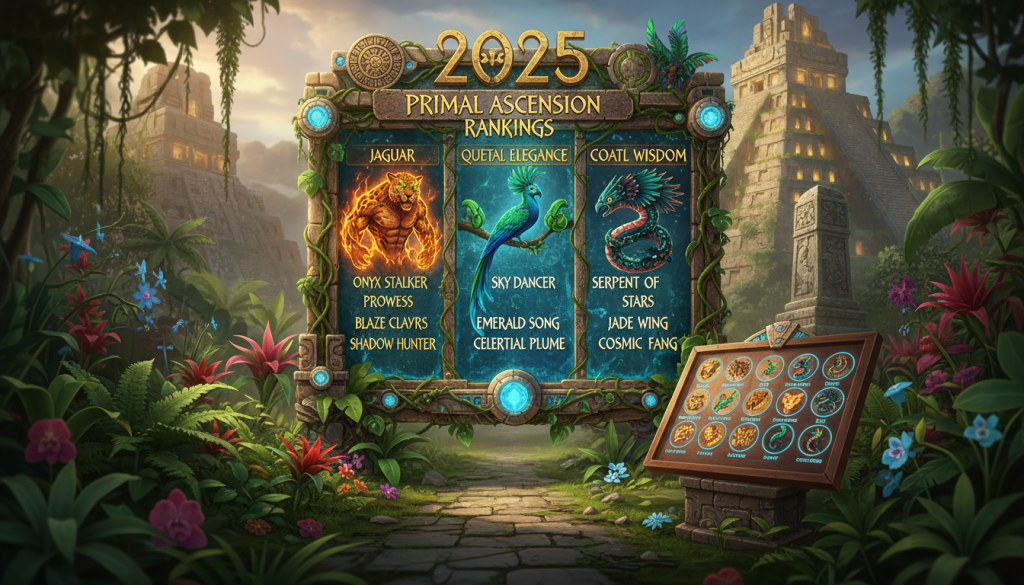
Use draft-position logic to lock the power curve so conflicts scale and stakes feel earned. This section gives a cheat-sheet approach for pre-ranking creatures, champions, relics, and factions ahead of a season or novel arc.
Draft-position tiers for creatures, players, and champions
Creators should build simple tiers—S, A, B, C—that reflect narrative cost and payoff. ESPN-style early rankings inspire this step: they turn intuition into a usable list.
- S-tier: franchise elements that drive plots and change laws.
- A-tier: reliable champions and relics that win scenes.
- B-tier: situational tools useful in specific arcs.
- C-tier: flavor items with low narrative weight.
Points leagues vs. category/ruleset variants
Decide whether the project runs like a points league or a category game. A points model rewards measurable outcomes—combat, relic recovery, rites—while category rules honor diplomacy, ritual purity, or knowledge.
- Define scoring: what actions earn points and how many.
- Rank players by narrative value: spotlight potential, conflict generation, and fit.
- Lock scarcity: how rare are relics, plumes, or oaths?
Practical checklist: finalize tiers, define scoring, decide scarcity, and lock the sacred-animal meta for the next phase.
Filters, Tags, and Listing Criteria to Find the Right Sacred Animal Fast
Smart search tools pair setting, magic intensity, and gameplay demands so users find the best animal quickly.
Filters cut browsing time by focusing on what the project needs. They group listings by setting (ancient empire, modern city, alternate realm) and by how magical the world feels.
Filter by setting, magic intensity, and narrative function
Creators pick a magic intensity from soft omen to hard rules. They then select narrative mode: portal, immersive, or intrusion.
- Setting: ancient, urban, or otherworldly.
- Magic intensity: subtle signs to codified miracle systems.
- Narrative function: who learns the rules and when.
Filter by gameplay: games, encounters, and progression paths
Gameplay tags help designers match animals to mechanics and missions.
- Encounter types: chase, trial, siege, negotiation.
- Progression: initiate → champion ranks.
- Rewards: relics, titles, blessings.
Quick “start” recommendations point users to fast choices: start with jaguar for war plots, start with quetzal for status politics, and start with serpent for temple-law campaigns.
Points tags support creators using scoring systems. Filters can prioritize reputation, relic scarcity, ritual compliance, or faction influence.
Use the premier league tag to flag top-tier listings. These motifs adapt across subgenres and a long season of releases.
Conclusion
The right animal anchor turns decorative detail into predictable drama that writers and GMs can reuse each season.
Use the directory’s promise: sacred animals are systems for identity, authority, and wonder, not mere ornament. The jaguar enforces night and war legitimacy. The quetzal controls status through scarcity. The feathered serpent holds law, lore, and order.
Creators should pick a narrative mode and subgenre tone early so the world stays coherent from opening hook to season finale. Build a small team of motifs so politics, magic, and culture interlock and fuel plot without forced exposition.
Start checklist: choose an animal anchor, define clear rules and costs, apply filters to find fitting listings, and draft a short arc with the directory’s tools. This guide is designed for premier league outputs—novels, campaigns, comics—and for first-time worldbuilders who want reliable, playable systems.
FAQ
Q: What is this directory about?
A: This directory catalogs sacred animals from Mesoamerican traditions — focusing on the jaguar, quetzal, and feathered serpent — and shows how creators can adapt those symbols for worldbuilding, games, and stories while respecting cultural context.
Q: Who should use these listings in the United States?
A: Writers, tabletop game designers, indie video-game developers, illustrators, and educators in the U.S. will find practical inspiration, visual motifs, and gameplay-friendly mechanics to help craft settings, parties, and campaign arcs that draw on Mesoamerican-inspired themes.
Q: How are the directory listings organized?
A: Listings are grouped by creature (jaguar, quetzal, feathered serpent), then by media type — literature, film, tabletop RPGs, and video games — with tags for subgenre, narrative role, and gameplay use to speed selection for specific projects.
Q: How can these animal symbols shape power and identity in a story?
A: Each animal maps to social roles: the jaguar often signals martial authority and rulership, the quetzal conveys sacred status and beauty, and the feathered serpent links knowledge, order, and divine legitimacy. Creators can use those links to build hierarchy, rituals, and political tension.
Q: What are common fantasy roles for jaguar characters?
A: Jaguars commonly appear as guardians, elite warriors, or royal totems. They work well as protectors of sacred sites, commanders of night operations, or embodiment of a ruler’s ancestral power in a campaign or novel.
Q: How should quetzal traits be used in plots and visuals?
A: Emphasize feathers, color, and rarity as plot devices: prized plumage can fund quests, ceremonial garb can mark lineage, and the bird’s elusiveness can drive exile-and-return storylines or social rituals tied to status.
Q: How can creators design a feathered-serpent mythos for high stakes?
A: Build layered institutions — temples, priesthoods, sacred texts — tied to the serpent’s cycles. Define clear rules for its powers, consent mechanics for worship, and limits that let the creature influence politics without breaking narrative tension.
Q: Should the feathered serpent be an ally or antagonist?
A: It can be either. Position the serpent relative to rulers, knowledge-holders, and rival cults. As an ally, it legitimizes reform; as an antagonist, it enforces cosmic order that conflicts with human ambition. Consider campaign balance and player agency when choosing.
Q: How to choose a narrative mode that fits these animals?
A: Match the mode to tone: portal stories suit outsiders discovering sacred realms, immersive settings normalize animal cults within daily life, and intrusion plots let sacred forces disrupt a mundane world. Each mode alters stakes and player expectations.
Q: How do magic and supernatural elements differ across genres here?
A: In high fantasy, powers tend to be systematized and empire-scale. Dark fantasy leans on ominous omens and ambiguous morality. Urban or contemporary takes ground sacred animals in modern settings, while mythpunk reinterprets folklore with subversive twists.
Q: What kinds of media adaptations are covered?
A: The directory spans literature, comics and manga-influenced designs, film and animation references, plus tabletop RPG and video-game adaptation notes — each with practical tips for translating symbolism into mechanics and visuals.
Q: How can teams and party builds use these animal archetypes?
A: Use archetypes to create party balance: jaguar-aligned fighters and scouts, quetzal-inspired diplomats and bards, serpent-touched sages and ritualists. Assign complementary skills and create quest hooks tied to each archetype’s strengths.
Q: Are there scoring or ranking tools for campaigns and leagues?
A: Yes. The directory offers points-style scoring ideas for quests, artifacts, and reputation, plus draft-board tiers for creatures and champions to help GMs or league organizers set fair drafting and ranking systems for 2025 planning.
Q: How do seasonal updates affect roster picks and story choices?
A: Seasonal “buzz vs. noise” sections advise when to push a trend or stick with core themes. They adapt start/sit logic — commonly used in competitive leagues — to decide when a sacred ally should lead a story or stay in reserve.
Q: What filters help find the right listing fast?
A: Users can filter by setting (urban, high-fantasy), magic intensity, narrative function (guardian, ruler, omen), and gameplay use (encounter, long quest, progression path) to quickly match needs and tone.
Q: How do listings handle cultural sensitivity and accuracy?
A: The directory stresses respectful adaptation: it encourages research, credits source traditions, and offers alternatives to avoid direct appropriation — suggesting fictionalized analogs and context-aware worldbuilding choices.